Newton Versus Descartes

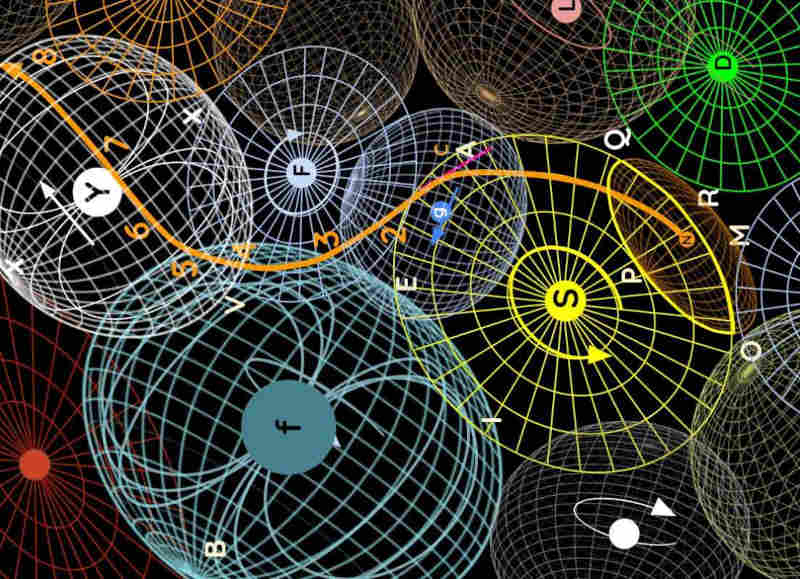
In 1644, Descartes established a complete theory of gravity, saying that objects revolve around the sun at varying speeds based on their location or distance from the center vortex, represented by the sun.
- The closest planets like Mercury revolved fast.
- The outer planets like Jupiter revolved slower.
- But the farthest objects revolved the fastest.
Each vortex is different from each other and so everything is relative depending on which vortex you use as the basis for measurement.
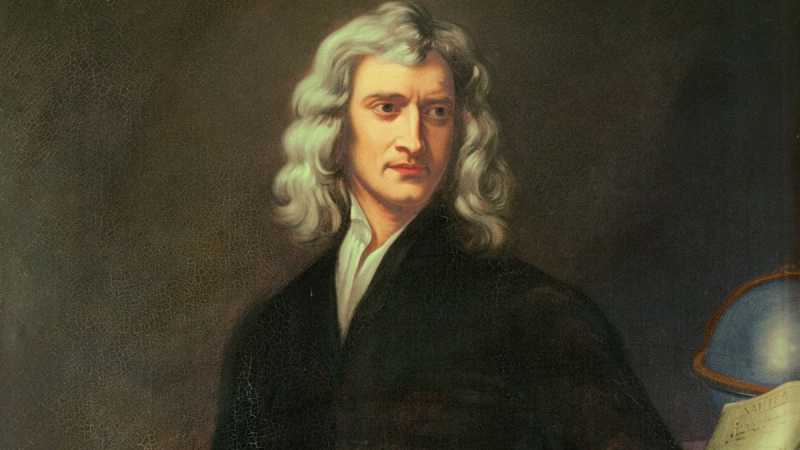
Newton debunks this in his Principia in 1685, saying that planets revolve according to their inertia and not their location.
This was validated when the outer planets were discovered, as well as comets coming back as predicted by Newton.
And so Descartes’ theory was abandoned forever.
The Dark Matter Attempt to Save Newtonian Physics
But in 1933, Fritz Zwicky found that the outer parts of galaxies revolve faster than the inner parts, violating Newton.
- This led to the invention of dark matter just to keep it within Newton’s laws.
But this really vindicated Descartes’ gravity – a supermassive blackhole is the best representation of a Cartesian vortex.
The speed of the outer parts is accounted for by the center of the vortex and not by any dark matter.
This exposes that Descartes’ system was super comprehensive – it explained the whole universe.
It was debunked by Newton who believed that the dynamics of the solar system was the basis of the movements of the universe.
In reality, the solar system, and stars in general, are just a small part of the universe.
There are bigger parts like galaxies, quasars, BAOs, clusters, clouds, etc.
Cartesian Physics accounts for such parts, both big and small.
Newton only accounts for the small matter-ial parts since his system is based on matter and the solar system.
Comet 3I Atlas
Recently, Comet 3I Atlas undebunked Descartes when it showed 6 major anomalies that are unexplained by Newtonian Physics.
But these are all easily explained by Descartes’ vortices which propel the comets.
Descartes’ System Explains Dark Matter AND Dark Energy
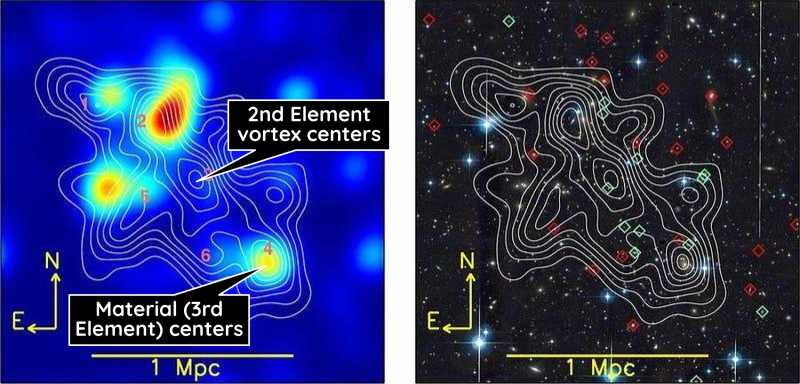
To put icing on the gravity-cake, the DESI telescopes, meant to measure dark energy, see that speed of the universe’s expansion measured through red-shift varies depending on which galaxy-cluster you look.
This is consistent with Cartesian Physics, where the expansion depends on each vortex and not on a universal speed limit.
These vortices act on space particles called the 2nd Element, causing dark-matter effects and dark-energy effects.
- Dark matter is an effect of the central vortex.
- Dark energy is an effect of clusters of vortices relative to each other.
Had people stuck with Cartesian Physics, anti gravity technology would have been developed much sooner, likely in the 1940s-1960s since it requires electricity and electronics.